What Remains When Everything Is Gone?
When I see these pictures, they feel more like a story than a memory.
Like one of those folk tales you're told as a child.
A story repeated so many times that it becomes part of you. A sense of knowing. Familiarity. Something deeply ingrained.
Yet somehow, the more familiar it feels, the more unreal it becomes.
I came across this photo recently, and it landed with feelings of awe, overwhelm, and sadness.
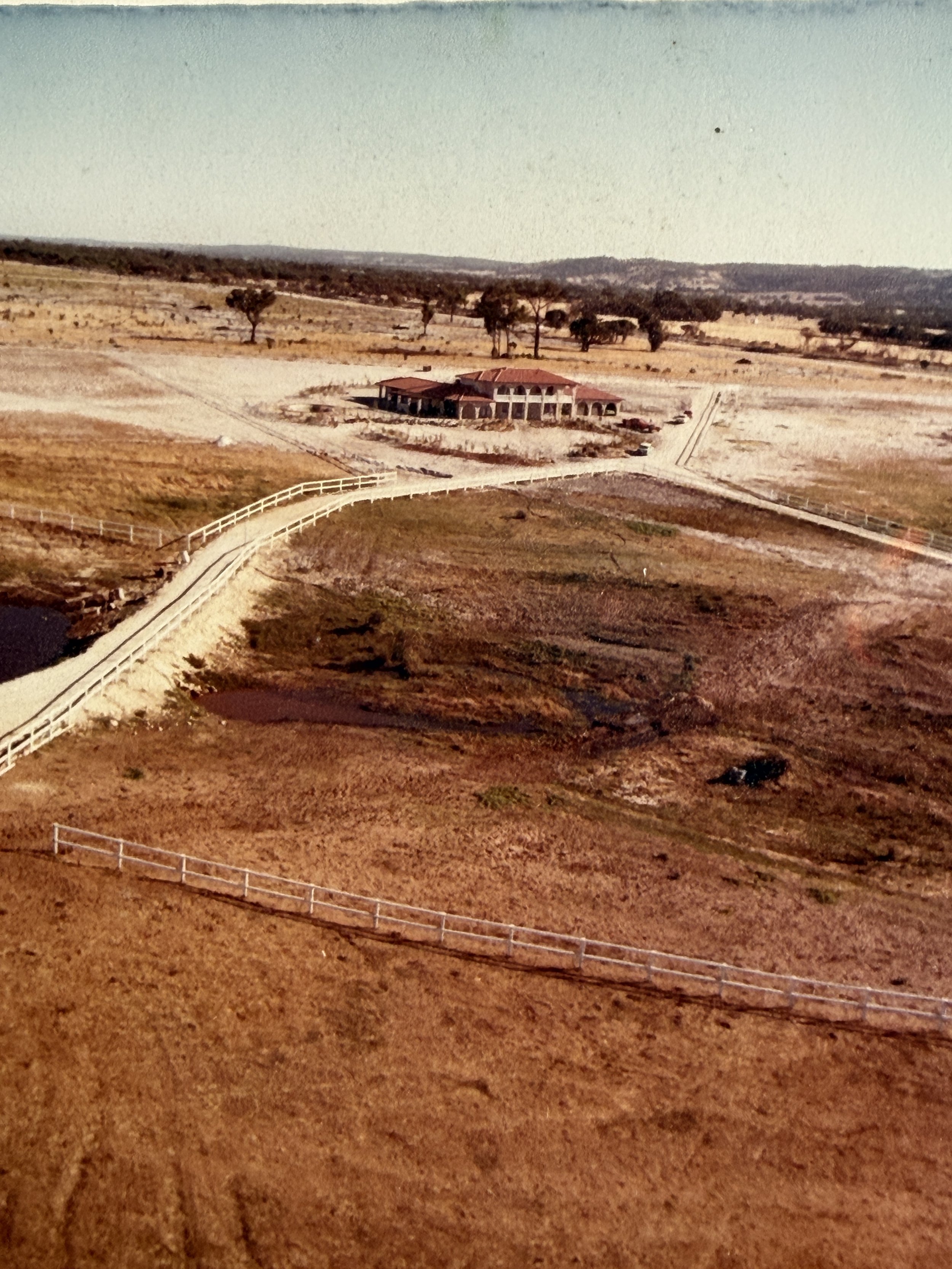
upperswan
A couple of years ago, during a family trip back to Perth, I met up with my oldest brother and we drove through The Vines Resort. It felt surreal. Almost disorienting.
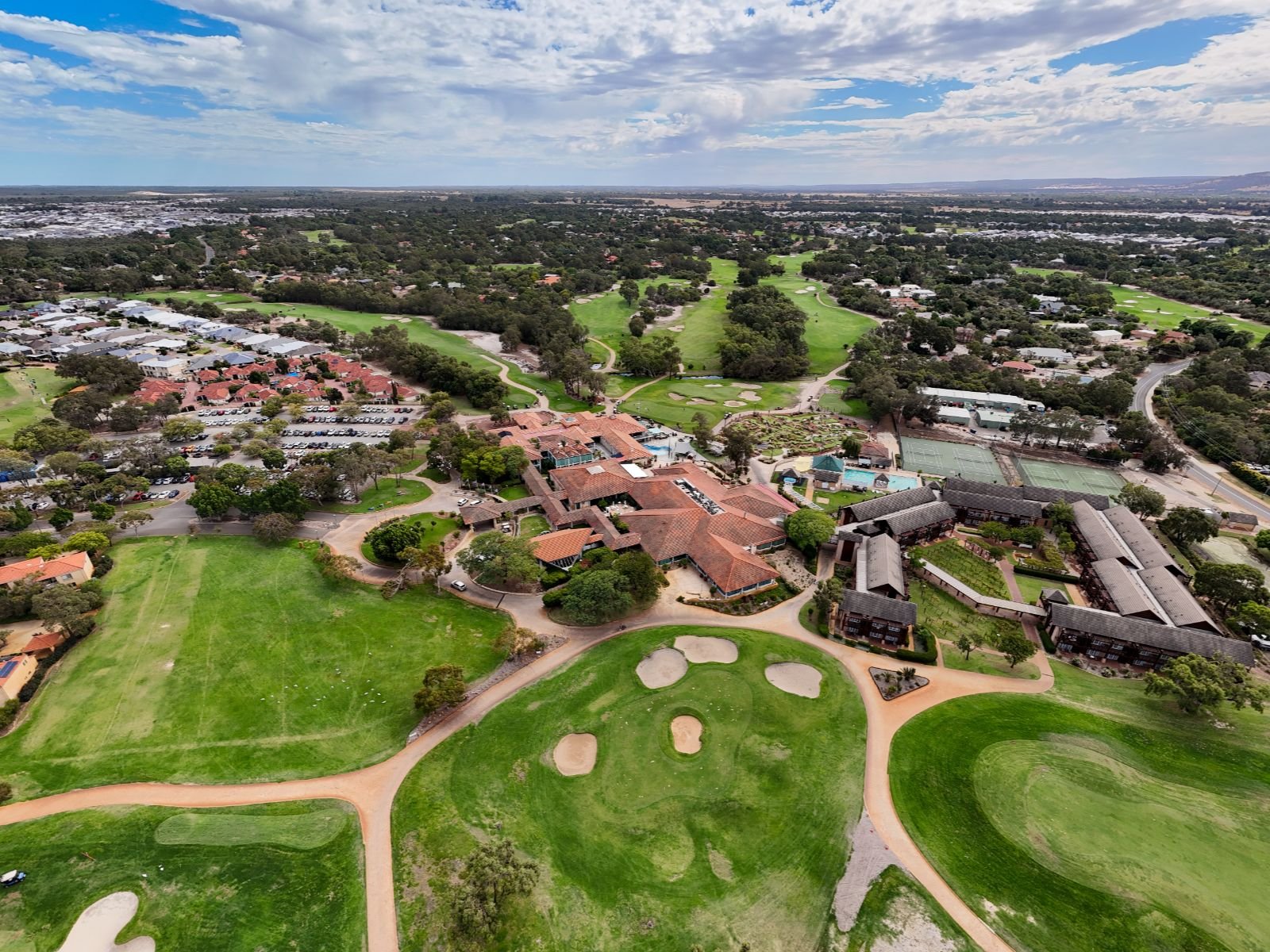
upperswan - vines resort
The life I knew as my childhood suddenly felt like it wasn't real at all.
Like it had been made up.
Or perhaps distorted by time, grief, stories, and the way memories are passed down.
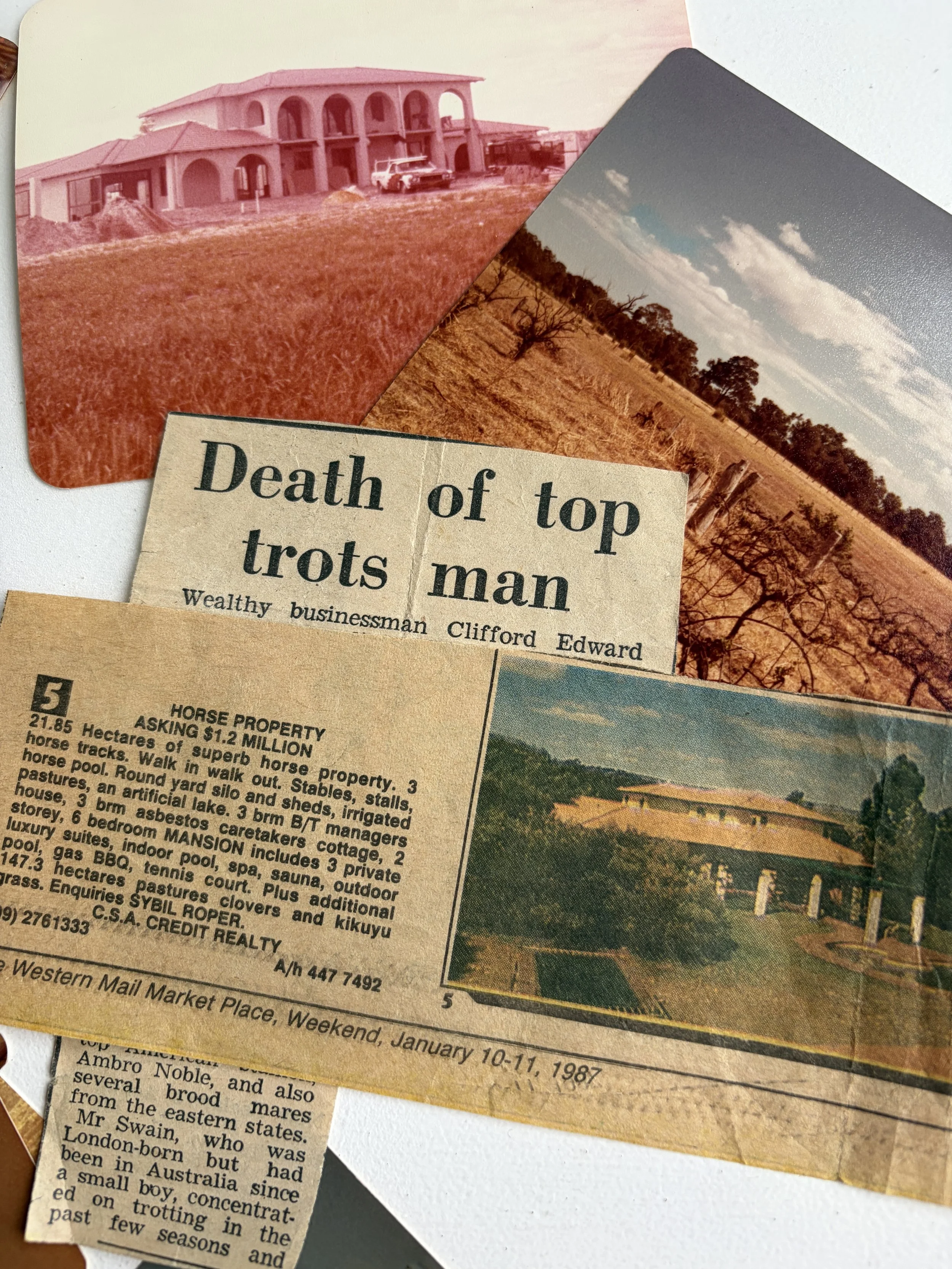
Not long before that, I had come across a newspaper clipping my mum had kept. It showed how much the property sold for in 1987. All 21.85 hectares of it.
$1.2 million.
It's almost laughable now, isn't it?
But what struck me wasn't the money.
It was the reality that where our family home once stood, there is now a resort. Streets. Houses. An entire suburb.
And the saddest part?
There is no trace of it.
Not him.
Not the house.
Not the land.
Nothing that resembles the place I knew.
As one description of the area states, the original Swain parcels don't appear as traceable on modern maps because they've been physically and legally absorbed into the resort layout.
Absorbed.
What a strange word.
A word that feels painfully familiar when you live with Complex PTSD.
Because healing often feels like that too.
A memory softens.
A feeling surfaces.
A fragment appears.
And suddenly you're left wondering what was real and what wasn't.
For years, I spoke about my childhood only through the fairytale version, because that was the version I had been given.
The version that had been narrated to me.
The stories. The photographs. The memories that others decided were worth remembering.
I wrote previously about an encounter with myself during a walk that left me crying for the father I never really got to know.
Not because he died.
But because I was robbed of forming my own memories of him.
Everyone wanted me to remember him.
So they gave me their stories.
Their pictures.
Their versions.
And somewhere along the way, I lost access to my own.
Just like I lost access to my childhood home.
Even where he is buried remains uncertain.
We drove past the church and cemetery hoping to confirm the location. Only to discover the property had been sold and transformed into a community home. The wall that once held plaques was gone. Hidden. Inaccessible.
It was as though he had never existed at all.
And perhaps that's why, in this season of healing, I find myself craving the truth.
Not just the good.
Not just the comforting.
But the bad.
The painful.
The ugly.
The whole story.
Because healing isn't built on fairytales.
It's built on truth.
I've had memories surface during Root Cause Therapy sessions.
Memories of my father trapping me in a room when he was angry with my mum.
I remember fear.
I remember anger.
I remember feeling small.
Yet when I speak of these things, others tell me a different story.
So what do I trust?
Was he provoked?
Was he misunderstood?
Were my memories wrong?
It's difficult to know.
For much of my life I carried a fear of my own anger. Before understanding Complex PTSD, I believed perhaps I had inherited something from him.
Now I see it differently.
I don't think I inherited anger.
I think I inherited survival.
And there is a difference.
But it's hard to know what was truly mine when the person closest to the story was also the one from whom I became estranged.
The storyteller.
The romanticiser.
The keeper of the narrative.
So I look at this photograph.
A house sitting on land that stretched as far as the eye could see.
And I wonder.
Did I dream it?
I live with aphantasia.
I cannot easily see images in my mind.
Yet somehow I can feel the rooms.
I can sense the colours.
I can remember the layout.
What I struggle to find are the moments.
The people inside them.
The laughter.
The connection.
The love.
What I remember most is being alone.
Playing alone.
Surrounded by gifts, perhaps.
But alone.
And then I think about my own children.
Particularly my youngest.
As the baby of the family, does she sometimes feel that same loneliness?
How do I help her remember that she belonged?
That she wasn't alone?
That our life was real?
We don't own a house and if I'm honest, I don't think I've ever really wanted one.
Looking at this picture, I find myself wondering if my past has something to do with that.
Maybe when you've experienced how quickly land, houses, possessions, and even family histories can disappear, you stop believing they can offer safety.
Maybe you learn that nothing physical is guaranteed to stay.
All I know is that when I look back, the house is what I remember.
Not the moments.
Not the laughter.
Not the love.
Just the structure.
And perhaps that's the lesson.
Because I look around at this busy world we're living in. A world full of distractions.
Schedules.
Screens.
Survival.
A world where being present feels harder than ever and I wonder what my children will remember.
Will they remember the house?
The toys?
The holidays?
The things we owned?
Or will they remember how they felt?
Will they remember that despite my own wounds, despite the pain, despite the defensive patterns and survival responses, they were deeply loved?
Will they remember they were wanted?
Because as I sit with this photograph, I realise something.
The house disappeared.
The land disappeared.
The maps changed.
The stories became blurred.
But the thing we are all searching for remains the same.
To love.
To be loved.
To know we belonged.
And perhaps, when everything else is gone, that is all that truly remains.