The Human Beneath the Calling: Moses and the Language of Survival
There is something so powerful about embodied enquiry, because when we begin to slow down enough to feel, reflect and enquire within, scripture no longer reads as just a story.
It becomes something lived, recognised and deeply felt.
We go from reading about people in the Bible as examples of faith, obedience, calling and service to God, to seeing the human experience underneath it all.
We begin to see the person.
We begin to see ourselves.
We begin to see the continual cycle of humanity and the ongoing need for grace, compassion, repair and restoration.
I think all of my training, personal healing and learning has brought me to a place of recognising my own inabilities in a way that no longer creates shame, but instead kindness and grace toward myself.
I can now pause. Reflect. Become aware.
And choose differently.
Something I could not always do when so much of my life was lived in survival mode.
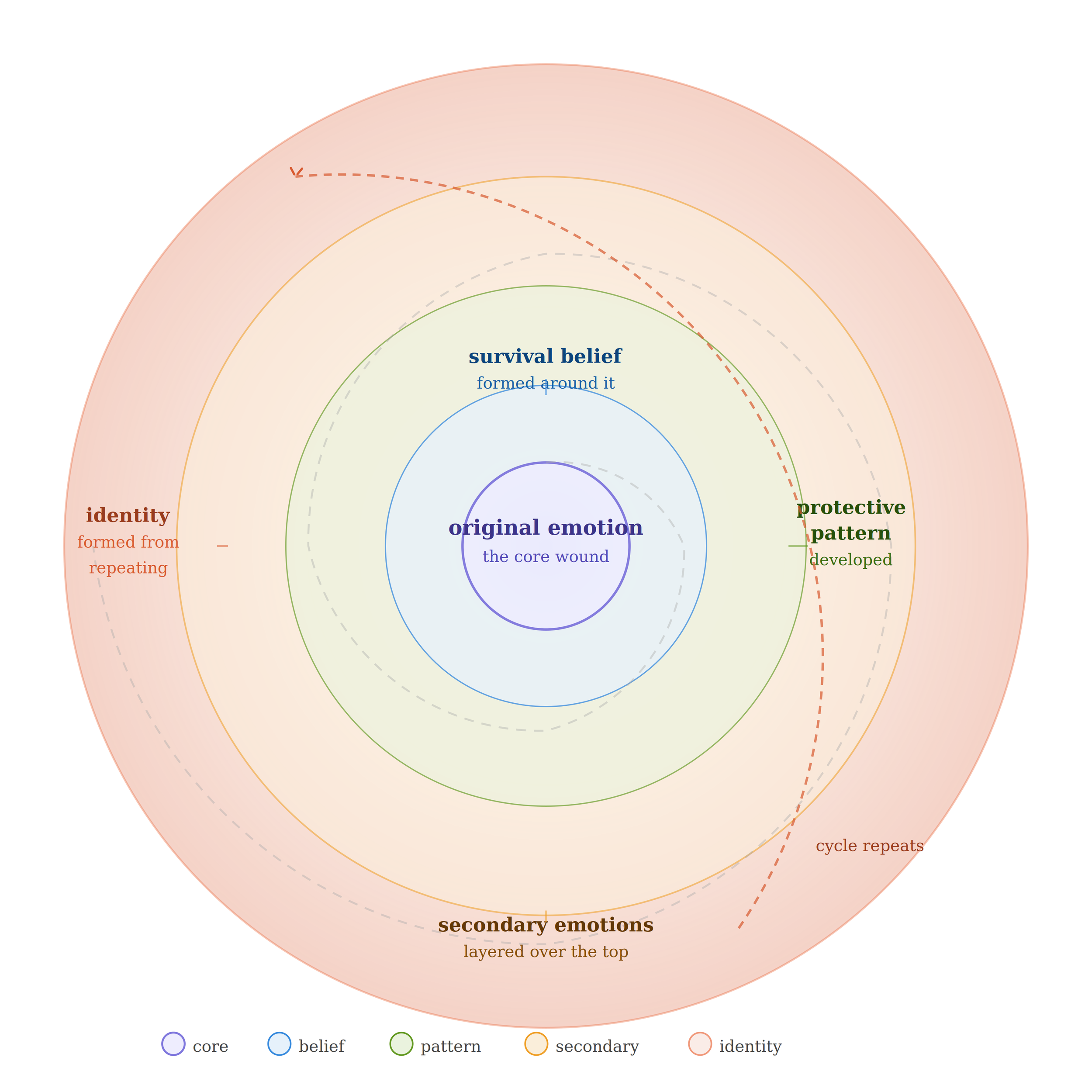
the spiral of human experience. D Mackay
I recently created this image to show how our emotions and experiences can shape the way we act, respond, see ourselves and even create identities that may be so far from the truth of who we really are.
I have spoken in previous blogs about identities, archetypes, guarding the heart and the power of emotions. But as I often do, I wanted to sit with what I was learning and ask:
Can this also be seen in scripture? and the answer was yes, so deeply.
The example that kept coming to me was Moses, a story most people know, even outside of Christianity.
For so long I think I viewed Moses mainly through the lens of the mind as a leader, a doer, someone who overcame adversity, answered God’s calling and led the Israelites through their journey.
But when we look through the lens of embodiment, there is something so much deeper.
Because Moses was not just a leader, he was a human navigating identity, fear, survival, grief and calling.
And suddenly the story becomes incredibly relatable.
We all tend to follow similar pathways as humans:
Experience.
Emotional wound.
Meaning.
Protective pattern.
This is human experience.
When we look at Moses through this lens, we begin to notice things differently.
Moses was born during a time when Hebrew baby boys were being killed. He had to be hidden in order to survive and was separated from his mother.
Pause and let that land.
This is trauma at the very beginning of life.
Then he was placed into the Nile and raised within the household of the very ruler ordering the death of Hebrew boys. He witnessed persecution, violence and injustice around him. Later he fled into the wilderness and lived in exile.
How had I never fully seen him as the human more than the story?, of course these experiences shaped him and there were wounds.
Fear.
Abandonment.
Confusion.
Grief.
Isolation.
Not belonging.
Powerlessness.
Shame.
Inadequacy.
There is a repeated theme throughout Moses’ story where he asks:
“Who am I?”
And I think sometimes we over-spiritualise these moments instead of recognising the emotional and relational depth within them, especially for someone with his experiences.
His words echo what so many of us quietly carry:
“I am not enough.”
“I do not belong.”
“I am unsafe.”
“I cannot do this.”
At the burning bush, Moses says:
“Who am I that I should go to Pharaoh?” Exodus 3:11
Then again:
“What if they do not believe me or listen to me?” Exodus 4:1
And later:
“I am slow of speech and tongue.” Exodus 4:10
Have we truly sat with these words?
Not seeing rebellion or weakness… but seeing resistance born from fear, identity wounds and survival?
Protective patterns are not character flaws. They are often strategies developed to survive.
Avoidance.
Withdrawal.
Self-doubt.
Hyper-responsibility.
These patterns make sense when we understand the wound underneath them, yet so often we focus only on Moses’ shortcomings or moments of anger without empathising with what he may have been carrying internally.
We can approach scripture through such a black-and-white lens focused only on obedience and consequence that we miss the humanity within it.
No wonder people distance themselves from faith or feel consumed by judgement and fear.
Yet Christ continually acquainted Himself with suffering.
He saw people.
He met people where they were.
And when wounds remain unseen or unprocessed, secondary emotions can begin to build on top of them:
Frustration.
Overwhelm.
Anxiety.
Anger.
We see this in Moses too, leadership becomes overwhelming and he reaches capacity.
He reacts in anger and feels burdened by the weight of people’s needs and responses.
“I cannot carry all these people by myself; the burden is too heavy for me.” Numbers 11:14
How many of us have felt that exact same way?
At capacity.
Unable to carry anymore.
Trying to hold everything together while ignoring the deeper wounds underneath.
But the beauty within Moses’ story is that God did not meet him with condemnation for being overwhelmed.
God met him in the hiding.
In the uncertainty.
In the resistance.
In the fear itself.
Support was provided, reassurance was given and help was sent.
Because God does not desire failure for us.
“The Lord is… not wanting anyone to perish, but everyone to come to repentance.” 2 Peter 3:9
“For I know the plans I have for you… plans to prosper you and not to harm you, plans to give you hope and a future.” Jeremiah 29:11
Wounds do not erase calling and fear does not cancel purpose. Struggle does not disqualify us from being used by God.
There is something I now feel so differently when I read Moses’ story.
“Who am I?” no longer feels like only doubt.
It feels like awareness.
I see now what has been carried, understand the enquiry, witnessing the restoration.
And this is why embodied enquiry matters so deeply.
Because when we learn to slow down, feel, reflect and listen inwardly with honesty and compassion, we begin to recognise our wounds without becoming defined by them.
We begin to notice the meanings we created in survival. We begin to understand our patterns with grace instead of shame.
And within that awareness, there is space for repair.
Space for God to meet us there and for restoration within.
The more I learn to embody and enquire within, the more scripture echoes differently.
Not just understood in the mind, but felt within the body, the heart and the human experience itself.